The Price of Silence: How Much is a Filipino Life Worth in 2026?
Tonight, as you sit in your home, remember this fact our leaders hope you will ignore: The land beneath your feet is already sold, and all of us paid the price.
We have been raised on a steady diet of “Filipino Resilience.” We are told that our ability to smile while wading through waist-high floodwaters is a badge of honor. But in the shadows of every congratulatory headline, this so-called “resilience” is used as an excuse for our leaders to ignore our suffering and expect silence in the face of repeated disaster. It is neither a point of pride nor a cultural virtue, but the outcome of enforced silence, a kind of systemic violence that quietly demands our compliance.
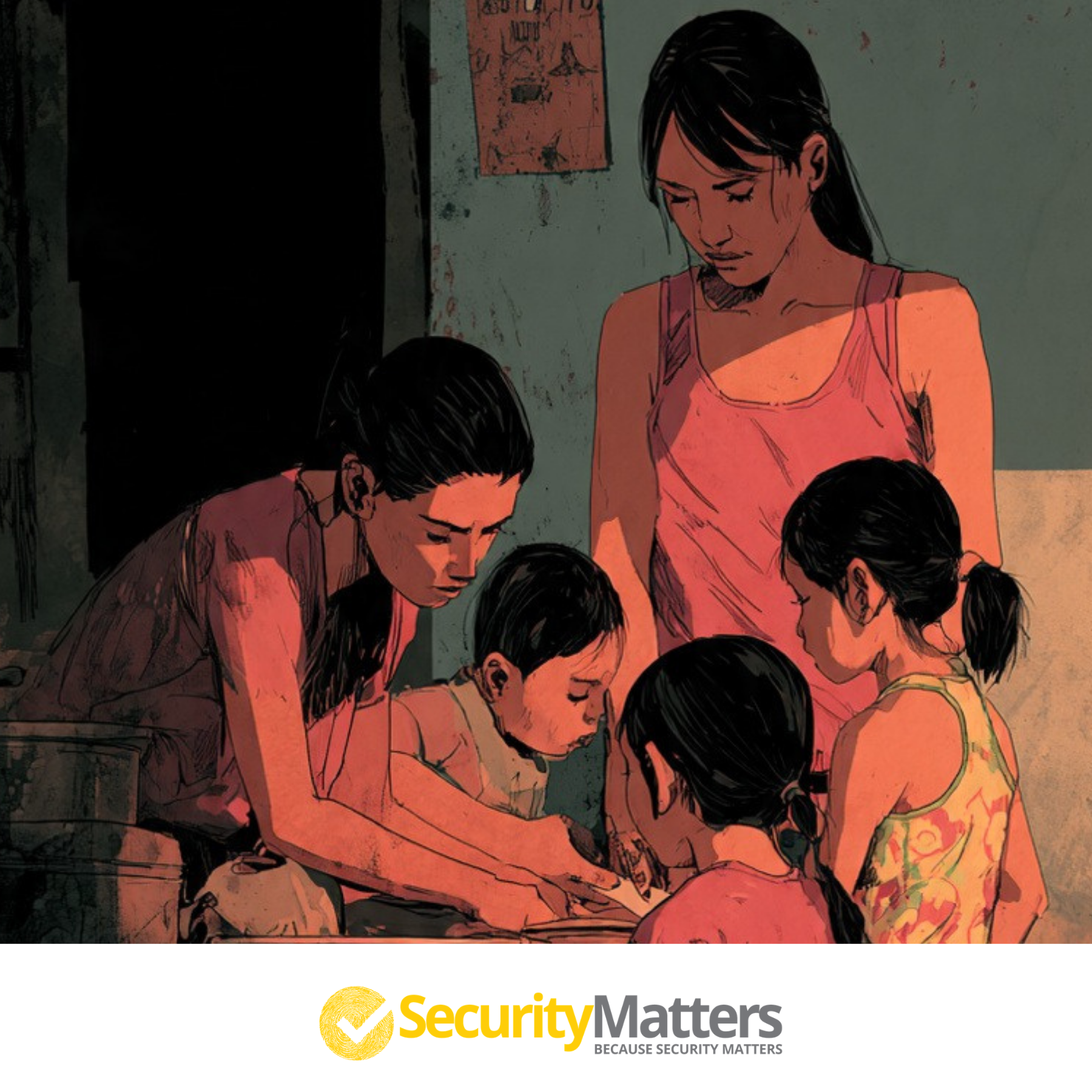
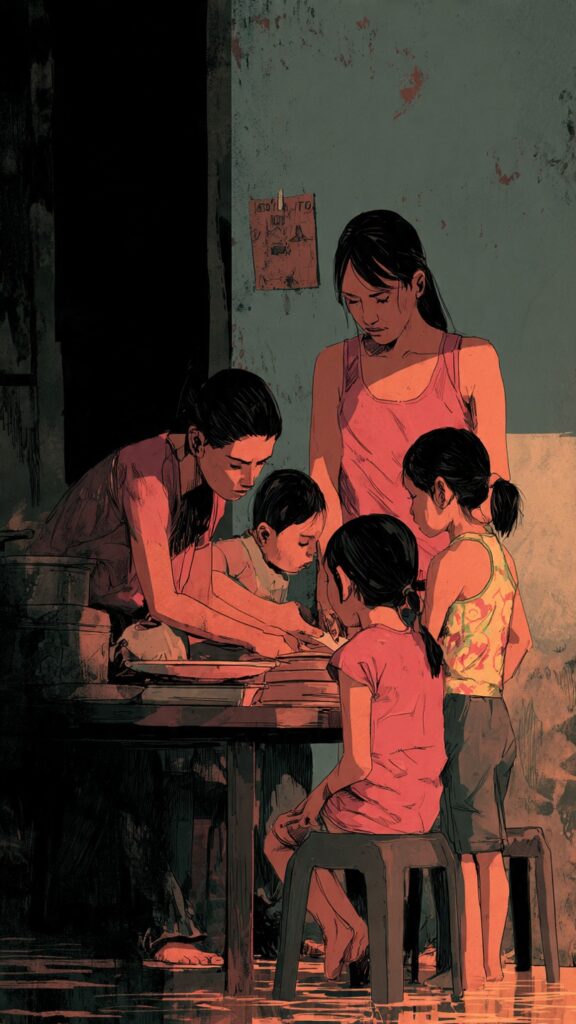
Take the San Pedro family in Laguna: each year, the mother, Liza, lifts her children onto their plastic table as water seeps into their living room, while her husband hauls sandbags instead of going to work. Their smiles for the camera mask the shame of being told, yet again, to wait for relief that never comes.
Yet if we have survived by being resilient, we also carry incredible strength. Resilience does not have to mean quiet suffering. Throughout our history, we have shown that we can transform hardship into action. As we mark the 40th anniversary of the EDSA Revolution this February, let us remember: the same spirit that endured disasters can rise to demand justice and real change. Filipino resilience, when turned outward, becomes collective resolve—a force that can break cycles of abuse and build a future where our children never have to smile through another flood.
The Drowning of a Nation
For years, we watched the Department of Public Works and Highways (DPWH) report thousands of “completed” flood control projects. We saw the ribbons cut and the plaques polished. Then came the typhoons of late 2025. We watched, once again, as grandmothers were hoisted onto roofs and children were swept away by currents that shouldn’t have existed.
Where did the ₱1.089 trillion go? According to Greenpeace campaigner Jefferson Chua in his December 2025 report for the East Asia Forum, that is the staggering sum of climate-tagged funds that have effectively vanished into thin air since 2023. Senator Erwin Tulfo, during the “Philippines Under Water” Senate inquiries, didn’t mince words when he described a system where 25% of a project’s budget is shaved off as a “commission” before a single shovel hits the dirt.
Think about that the next time you see a “ghost” dike or a pumping station that doesn’t turn on. That isn’t just “overpricing.” That is the sound of your taxes being used to buy the very coffin the next flood will put you in. When a contractor uses substandard cement to save a few million pesos for a politician’s pocket, they aren’t just stealing money; they are sabotaging the structural integrity of our lives.
The Verdict: Corruption KIlls
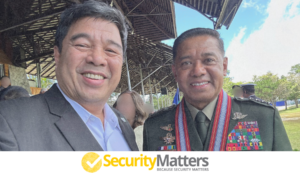
When we speak of “ghost” projects, we often treat them as a bureaucratic scandal. But Augustus Caesar “Ace” Esmeralda, an alumnus of the Philippine Military Academy(PMA) and the Asian Institute of Management (AIM) strips away the clinical mask.
With an Executive Master in Disaster Risk and Crisis Management from AIM and a background in digital forensics, serving as the President of Ace And Associates Risk Management, Inc. and Chief Resilience Officer of Resilient.PH, Esmeralda doesn’t just see a missing dike; he sees a breach in national defense. When a man of his stature speaks, it is with the tactical precision of a soldier and the analytical rigor of a risk specialist. To him, the failure of infrastructure is a calculated betrayal of the “duty of care” leaders owe their people.
“Ghost flood control projects are premeditated crimes. Not homicide but murder. Corruption kills.” — Ace Esmeralda
This isn’t an activist’s slogan; it is a clinical autopsy of a dying system. By labeling these “ghost” projects as premeditated murder, he challenges us to stop calling it “graft.” Graft is a desk crime; murder is a blood crime.
The Sovereign Sell-Out
While we are told to fear the warships on our horizon, we have ignored the enemies walking through our front doors with briefcases. The conviction of Alice Guo (Guo Hua Ping) in late 2025 should have been a moment of triumph. Instead, it was a terrifying autopsy of our national security.
As Senator Risa Hontiveros noted in her post-conviction statement, the ease with which foreign criminal syndicates acquired Filipino identities to hold public office is a “blinking red light for our national security.” We are a nation where a foreign national can allegedly “buy” a birth certificate, a mayoral seat, and the power to operate a high-tech fortress of human trafficking and espionage—all while the local police and regulatory bodies claim they “saw nothing.”
How can we claim to defend our borders when our municipal halls are for rent? If a mayor’s office can be bought, can a naval base be next? Can a province? Corruption is no longer a “civil” issue; it is a Trojan Horse that has already been wheeled into the heart of our Republic.
The ₱6.7 Trillion Feast
On January 5, 2026, the new national budget was signed into law. It is the largest in our history: ₱6.793 trillion. Within those pages lies a hidden feast. Despite the outrage, billions remain tucked away in “Confidential and Intelligence Funds” (CIF) and “Unprogrammed Appropriations.” As Dr. Ma. Victoria Raquiza of Social Watch Philippines warned in her January 2026 budget brief, these funds are “prepared outside public view and without sufficient justification.”
Every time a politician defends a “secret fund” that cannot be audited by the Commission on Audit (COA), they are telling you that you don’t have the right to know how your sweat and toil are being spent. They tell us it’s for “security.” But ask the soldier at the Ayungin Shoal who is still waiting for basic equipment, or the teacher in a classroom with a leaking roof, if they feel “secure.” A secret fund is rarely a secret from the enemy; it is only a secret from the taxpayer.
The corrupt rely on one thing: your exhaustion. They count on the fact that you have jobs to go to, children to feed, and a commute that drains your soul. They hope that by the time you get home, you’re too tired to be angry. They want you to believe that “this is just how things are.” But “how things are” is currently killing us. If we are to survive, we must shift from being victims of the current to being the auditors of the flow.
This shift begins when we refuse to look away from the rot. We must break the silence by reporting every “ghost” dike and every substandard bridge to the Office of the Ombudsman, located along Senator Miriam P. Defensor-Santiago Avenue in Quezon City, or by calling their hotline at (+632) 5317-8300. We must utilize digital tools like the COA Citizens’ Desk at citizensdesk@coa.gov.ph and text-only reports to 0917-320-6543, or use volunteer-led platforms like Bayanihan Online to submit evidence of the theft happening in our own backyards. True accountability starts at the smallest level, in the barangay assemblies, where we must demand to see the receipts before the next storm washes the evidence away.
We do not stand alone in this rising tide. Groups like Social Watch Philippines are already tearing the “secret” out of the national budget, while organizations like Greenpeace Philippines track the trillions that have vanished under the guise of climate resilience. Even the streets are speaking again, as the Third Trillion Peso March proves that the Filipino spirit cannot be bought with a stolen identity or a confidential fund.
The late 2025 conviction of Alice Guo was not just a headline; it was proof that the Trojan Horse can be expelled when we hold the light steady. We have a proven history—from the halls of EDSA to the inquiries of the Senate—of transforming hardship into a force that shatters cycles of abuse. Protecting your family begins with recognizing that your survival is not a favor granted by a politician, but a right you have already earned through your own labor.The money is gone. The dikes are broken. The offices are for sale. The water is rising. We can continue to be “resilient” until we are underwater, or we can finally realize that the people we elected to lead us are the ones holding our heads below the surface. If your silence has a price, they’ve already paid it. What is your survival worth to you?
Read: Living in water: The families left behind by flood control failures (Part 1)
‘May tutulong pa ba?’ Laguna town residents seek safe housing amid yearly flood
Author