ASEAN 2026: Leadership by Conviction, Not by Ceremony

By Augustus Caesar “Ace” Esmeralda, Editor-in-Chief
The Philippines assumed the ASEAN Chairmanship for 2026 under the theme “Navigating Our Future, Together.” It is an inspiring declaration. But for those of us who work in security, inspiration must be matched by strategy. The real question before Manila is not whether we can host a successful diplomatic year. It is whether we can use that platform to produce a Code of Conduct with genuine legal force, or whether we will preside over another round of polished language that changes nothing on the water.
That question deserves a direct answer, not a ceremonial one.
Twenty-Four Years Is Long Enough
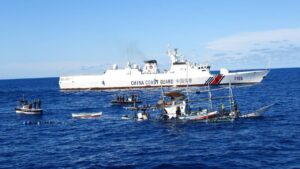
The Declaration on the Conduct of Parties, signed in 2002, was a starting point. It was never meant to be a destination. Yet here we are, nearly a quarter-century later, still negotiating a binding framework while China has constructed fortified artificial islands, deployed maritime militias, and routinely used water cannons against Philippine vessels within our own Exclusive Economic Zone. The Permanent Court of Arbitration ruled definitively in 2016 that China’s expansive maritime claims have no basis under international law (PCA Case No. 2013-19). Beijing has simply declined to acknowledge that ruling.
A code of conduct that lacks enforcement provisions does not resolve this situation. It formalizes it. Secretary Enrique Manalo and the Department of Foreign Affairs have been consistent and correct in insisting on a legally binding agreement. That position must hold. In security terms, an unenforceable rule is not a rule. It is a signal to the other party that the status quo is acceptable.
Sovereignty Is Not a Bargaining Chip
Some observers frame the Philippine position as confrontational or divisive within ASEAN. That framing is inaccurate. The ASEAN Charter of 2007 affirms the sovereign equality of all member states and guarantees each nation the right to conduct its affairs free from external interference. When Manila asserts the right to pursue joint energy development with international partners, or to conduct military exercises with allies such as the United States, Japan, or Australia, we are not acting against ASEAN. We are acting in accordance with the principles on which ASEAN was founded.
The proposed “alliance veto” provisions, which would require consensus before any member could engage external partners for defense or development, represent a structural weakening of Philippine sovereignty. No security professional can endorse a framework that limits a nation’s right to defend itself or develop its own resources without obtaining approval from a regional body subject to outside pressure.
The Operational and Economic Costs Are Real
This is not abstract geopolitics. The South China Sea accounts for roughly 12 percent of the global fish catch. Continued access denial and reef destruction carry direct consequences for food prices in local markets. More than three trillion dollars in global trade moves through these waters annually, according to UNCTAD. Sustained tension drives up shipping insurance costs and supply chain vulnerabilities, both of which are ultimately paid for by ordinary consumers.
China’s documented practice of using large fishing vessels as a de facto maritime militia to block Philippine Coast Guard operations in the Recto Bank area imposes ongoing operational costs on our national forces. Blocked access to natural gas exploration sites at Reed Bank deepens our dependence on imported fuel. These are not rhetorical concerns. They are measurable, documented impacts on the Philippine economy and on national security planning.
Regional analysts have not been optimistic. Chatham House noted in 2025 that a substantive agreement is unlikely to be concluded during this chairmanship year, given the gap between Manila and Beijing. The East Asia Forum has observed that ASEAN currently lacks meaningful enforcement capabilities, which reduces the incentive for China to accept any agreement that constrains its behavior.
What the Philippines Must Defend
The Philippine delegation must treat several elements as non-negotiable. UNCLOS 1982 must be explicitly named as the sole legal framework for determining maritime entitlements. The Code must apply to all disputed features without geographic exclusions designed to protect existing Chinese installations. The Philippines must retain full sovereign authority to pursue joint development and defense activities with partners of our choosing. And any dispute settlement mechanism must have a binding legal effect, not merely a pathway to further consultation.
These are not extreme positions. They are the minimum conditions for an agreement that serves Philippine national interests.
The Standard for Success
ASEAN consensus politics have genuine value in many contexts. But a consensus that produces agreements without accountability is not diplomacy. It is delayed. The Philippines has a legitimate opportunity in 2026 to set a higher standard for what regional security governance can look like. That means pushing for a Code of Conduct that reflects the rule of law, not one that accommodates those who have consistently chosen to operate outside it.
President Marcos Jr. has framed his approach as one of broad friendship and regional unity. Those are worthy instincts in normal diplomatic circumstances. The South China Sea, however, is not a normal diplomatic circumstance. It is an active security environment where the costs of a weak agreement are borne by Filipino fishermen, coast guard personnel, consumers, and future generations who will inherit whatever arrangement we sign.
The gavel of the 2026 Chairmanship represents real authority and real responsibility. Used well, it can advance a rules-based framework that protects Philippine sovereignty and sets a durable precedent for the region. Used poorly, it becomes a symbol of missed opportunity at a critical moment in our history.
SecurityMatters will continue to monitor and report on these developments throughout the year. The security of our seas is not a topic for diplomatic footnotes. It is a national priority, and it deserves to be treated as one.
Augustus Caesar “Ace” Esmeralda is the Editor-in-Chief of SecurityMatters Magazine and Newsletter. He can be reached at www.securitymatters.com.ph.
Author