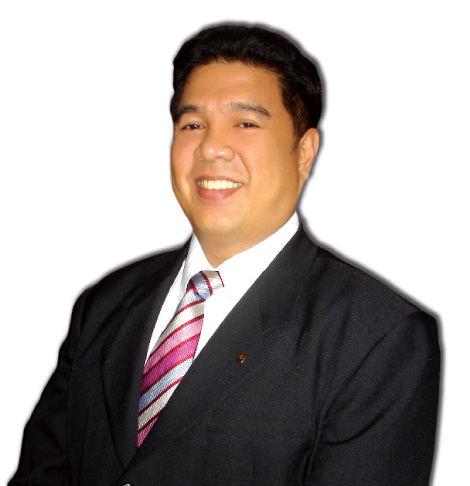
My Bunkmate Omet: Hail to the Chief!
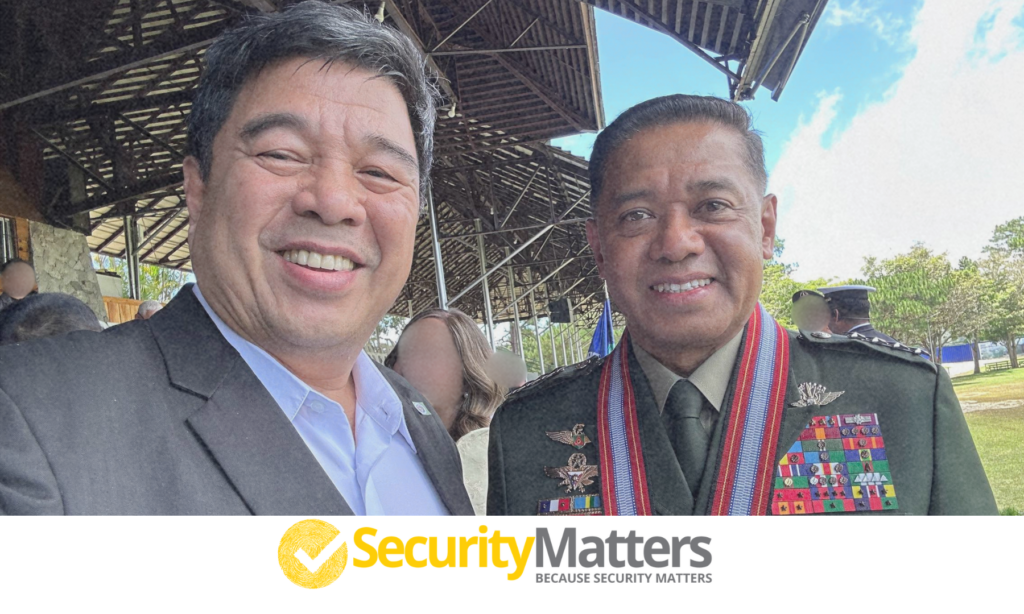
The author is a member of PMA “Makatao” Class of 1989 and a former Army officer. He has known General Brawner since their plebe year at Fort del Pilar, and when they were bunkmates in the Regimental Staff Room from 1988 to 1989.
On July 4, 2026, I sat among the guests at Borromeo Field and watched my best friend bid farewell to the Academy that nearly lost him twice: once, when he deliberately failed a mathematics course, and once, when I helped him through a period of grief in 1988.
General Romeo Saturnino Brawner Jr. retires this month as the 60th Chief of Staff of the Armed Forces of the Philippines, and is the first to complete the full three-year term mandated by Republic Act 11939. His tenure included the most serious maritime confrontations with China in a generation and a coup attempt that he later exposed. The public knows the general; I know Omet, the cadet from Baguio. To understand the chief, one must also know the cadet.
I write this as his friend. Readers deserve this disclosure, and the friendship is also my credential.
The Boy from a House Full of Uniforms
Omet never had to explain the military to himself. He was born in Baguio on March 18, 1968, into a family where service was the household language. His father, Romeo Sr., became Presiding Justice of the Court of Appeals and later a commissioner of the Commission on Elections. His mother, Dr. Lenora Fe Saturnino Brawner, taught with the original faculty of UP Baguio. His uncle Felix Jr. topped PMA Class 1957, commanded the Scout Rangers, and stood with Marcos Sr. at EDSA in 1986 while counseling against firing on the crowds. The family traces its name to Private Lisbon Brawner, an African American Buffalo Soldier who came with the US Army in 1899 and chose to stay. Omet loves telling that story, and it explains something about him: he has never seen loyalty and independence as opposites.
He did not proceed directly to Fort del Pilar. After graduating from UP Baguio High School, he spent a year at UP Diliman, where he was approached by the underground movement, as were many talented students of our generation. Some of his seniors joined the movement and never returned. He chose a different path and entered the military.
The Cadet Who Tried to Fail
Our plebe year was challenging, and as Omet has publicly acknowledged, we experienced hazing. He coped by taking each day as it came, a method he still advocates. However, surviving is different from choosing to stay. In 1986, he decided to leave and attempted a quiet exit by deliberately failing a five-unit mathematics course, returning home, and re-enrolling at UP Diliman. The Academy investigated, determined the failure was intentional, contacted his father, and ordered him to return. He came back reluctantly, but now considers it the second chance that made everything else possible.
I witnessed the second crisis, which has not been shared publicly until now. In February 1988, his cousin Boboy, First Lieutenant Felix Brawner III of Class 1984 and the only son of his uncle Felix, died when his truck hit a landmine during operations against the NPA in Bicol. The news deeply affected Omet. At the time, I was acting Regimental Commander of the Cadet Corps, and Omet was my executive officer. Weeks after the burial, he told me he intended to resign. The Academy had already given him a second chance; now grief was urging him to leave again. We discussed it several times, and I told him bluntly that quitting would waste what Boboy had sacrificed. I urged him to finish the course and honor his cousin by serving well and long. He chose to stay. While the decision was his, I have often recalled that moment whenever I have seen him refuse an easier path since.
He graduated as salutatorian of our class and held the Baron’s rank during the first semester of our final year. The cadet who once tried to leave finished second in the order of merit and became our Army marcher. While I served as Regimental Commander and First Captain of the Corps in 1988-1989, my bunkmate, Omet, was the Baron of the Armed Forces of the Philippines for three years.
Bullets, Books, and the Long Middle
He aspired to join the Scout Rangers like his uncles and cousin, but the Army assigned him to Special Forces, a path that became central to his career. He served as a platoon leader in Nueva Ecija, surviving a 1990 ambush in Carranglan, then as a company commander in Caraga and Davao, and later as battalion commander of the 2nd Special Forces “Sabertooth” Battalion in the Visayas. He pursued extensive training, excelling in the Special Forces Operations Course, the Intelligence Officer Course, and the AFP Comptrollership Course. He earned a master’s in Strategic Studies from the US Army War College, which inducted him into its International Fellows Hall of Fame, and also completed graduate degrees in information management and business administration from Ateneo University, European School of Management, Oxford University (United Kingdom), Master’s in Business Administration from Asian Institute of Technology (Thailand), Master’s in Business Administration, and Asia-Pacific Center for Security Studies (Honolulu, Hawaii, USA) where he completed the Advanced Security Cooperation Course.
During the middle years of his career, his promotion to star rank lagged behind that of our Mistahs. Advancement depends as much on timing and vacancies as on merit, and seeing others promoted first can be discouraging. He confided in me about whether the service still valued his contributions. I assured him then, as I do now, that the Army was simply slow, but still his. Careers are marathons, and those who finish are those who remain committed to the institution. We prayed together for God’s direction, as we did as cadets at the All Saints Chapel of Fort del Pilar. He stayed, and eventually, the promotions and new challenges followed.
Marawi, and the Hardest Homecoming
Before the 2017 Marawi siege brought him national attention, we agreed he should maintain a low profile after returning from studies abroad. However, he soon encountered his former cadet squad leader, General Ramiro Rey, who emphasized the need for officers on the battlefield. A chance meeting with General Eduardo Año at GHQ further set his course. He served as deputy commander and spokesperson for Joint Task Force Ranao during the five-month battle, then returned from the War College in December 2018 to command the 103rd Infantry “Haribon” Brigade in the aftermath of the battle in Marawi. The last remaining leader of the original Maute-ISIS group, Abu Dar, was killed by his troops on March 14, 2019, in Tubaran, Lanao del Sur; four soldiers died in the operation, and DNA testing later confirmed the result. Omet considers the operation a birthday gift, as he turned 51 four days later. President Duterte awarded him the Order of Lapu-Lapu. He has always emphasized, both privately and publicly, that no one wins battles alone.
Six months later, the Army assigned him to Fort del Pilar with the most difficult task of his career. On September 18, 2019, plebe Darwin Dormitorio died from injuries inflicted by upperclassmen, leading to the resignation of the superintendent and commandant. On September 26, Omet became Commandant of Cadets and was tasked with eradicating the hazing that had marked our own plebe year. Many classmates told him it was impossible, claiming hazing was ingrained in the Academy. He believed cadets would choose differently if leadership set the example. Since then, no hazing deaths have been reported at the Academy. While I remain cautious about declaring cultural victory, I witnessed him take on and succeed in a challenge few would attempt.
The Second Life
July 4, 2021, marked a turning point in his life. That morning, as the incoming commander of the 4th Infantry Division, he boarded a C-130 at Villamor Air Base with his family, en route to his new post. The family disembarked at Lumbia airfield. The aircraft continued to Sulu, where it crashed on landing at Patikul, killing 53 people in the deadliest air disaster in Philippine military history. He later said, “Pangalawang buhay ko na ito”—this is my second life. He has measured his years from that day, and his farewell to the Corps occurred, by coincidence, exactly five years later.
His second life remained perilous. In October, NPA gunfire struck a helicopter in his convoy over Bukidnon’s Pantaron Range, forcing an emergency landing. On October 30, 2021, his division’s troops killed Jorge “Ka Oris” Madlos, the NPA’s most senior commander. Weeks later, he assumed command of the Philippine Army, where he prioritized troop welfare and dismantled private armed groups before the 2022 elections.
The Chief Who Would Not Blink, and Would Not Reach
President Marcos Jr. appointed him AFP chief on July 19, 2023, making him the first to serve under the fixed three-year term of RA 11939. Previous chiefs had averaged less than a year in office, creating instability in strategic planning. Omet’s task was to demonstrate that a chief could plan for the long term. He introduced the UNITY framework—unification, normalization, internal security, territorial defense, and youth—but the real shift was the AFP’s focus from internal insurgency to maritime defense.
The maritime threat soon materialized. On June 17, 2024, Chinese Coast Guard personnel armed with axes and knives boarded and rammed Navy boats resupplying the BRP Sierra Madre at Ayungin Shoal. A Philippine Navy SEAL lost his right thumb; the attackers seized Philippine-owned rifles and damaged equipment. Omet labeled the incident as piracy, commended his sailors for resisting despite being outnumbered, estimated the damage at 60 million pesos, and demanded compensation from Beijing, which did not respond. Surgeons later reattached the sailor’s thumb. Omet’s response was informed by personal experience; in December 2023, he had personally joined a resupply mission that was water-cannoned and rammed by Chinese vessels. Few chiefs have faced such risks firsthand.
His approach was to document and publicize every incident, a strategy analysts called “assertive transparency,” which he formalized as the Communications Plan Mulat. This approach garnered international support and removed Beijing’s ability to deny incidents. Critics rightly note that public exposure has not stopped the aggression. He recognized this, but maintained that a documented grievance is preferable to silence.
In his final years, he spoke openly about issues his predecessors addressed only privately. He instructed Northern Luzon Command to prepare for the evacuation of a quarter-million Filipino workers in the event of a Taiwan conflict, prompting a strong response from Beijing. He stated he would keep American Typhon missiles in the country permanently if given the choice. He warned of Chinese infiltration in schools, businesses, and the military, with espionage arrests following soon after. At the 2025 Shangri-La Dialogue, he was targeted by fake journalists and a doctored video, which he publicly exposed. Deepfakes of his face and voice now circulate widely, prompting the AFP to issue formal denials. When Beijing imposed sanctions in June 2026, it targeted Defense Secretary Gilberto Teodoro, not Brawner. The harshest criticism came from within the country, including accusations of being a CIA puppet and criticism from senior and retired officers for not supporting a revolt. He handled these attacks with the same resilience he showed as a cadet.
He then faced a test I wish he had been spared. In September 2025, amid public outrage over the trillion-peso flood-control scandal, eight retired officers approached him at Camp Aguinaldo with options: a coup, a junta, or withdrawing support from the President to “reset” the Republic. He refused, affirmed the institution’s loyalty to the Constitution, reported the incident to the President, and publicly disclosed the offer at a forum for foreign correspondents in October. President Marcos expressed his trust in the AFP to act appropriately. In a country with a history of political upheaval, a chief who rejects power and brings such offers to light is rare. I was not surprised; the man who refused to quit in 1988 would not seize power in 2025.
What He Hands Over
He leaves his successor with a strategy that current budgets cannot fully support. His Re-Horizon 3 program envisions up to two trillion pesos over a decade for fighter jets, radars, missiles, and submarines, which he considers both essential and aspirational for the Philippines. Congress allocated about 40 billion pesos for modernization in 2026. He has rightly stated that every peso lost to the flood control scandal was a peso taken from soldiers’ equipment. He also leaves behind an unfinished pension reform, which he addressed candidly, telling senators that while the proposed contributions would burden his troops, they would still serve if the state honored its commitments.
But the most significant for me is the creation of the AFP CyberCommand. A dream that came true during his tenure. I felt I had also reached that goal with him.
Malacañang has not yet named who will inherit all this; the shortlist reportedly includes the acting vice chief and the three service commanders. Omet has announced no plans, and I will not speculate in print about a friend’s future, though the guessing around him runs from cabinet rooms to the 2028 ballot. During his testimonial dinner in Baguio City, Mayor Benjamin Magalong grabbed my camera and took this photo for posterity and provenance.
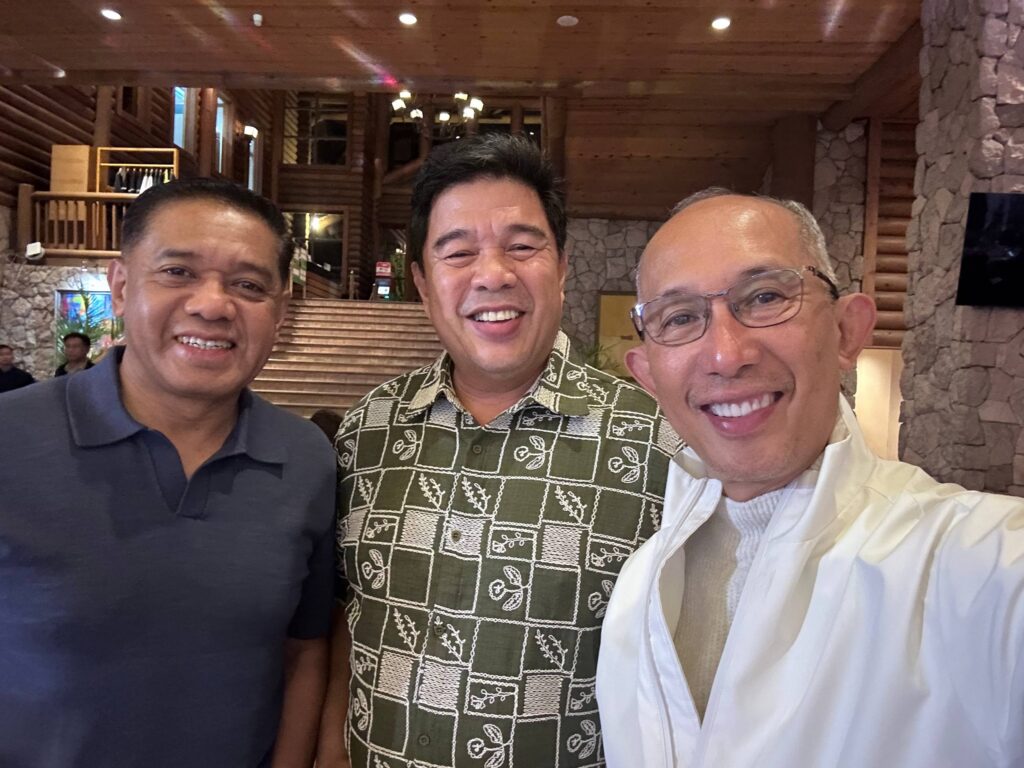
In his farewell remarks at the Cadets’ Mess Hall, he offered the cadets five pieces of advice: take it one day at a time, serve others before yourself, stay united in purpose, trust God’s timing, and keep faith when the path is unclear. The Corps heard guidance; I heard his autobiography. What Omet wanted and what God intended were not necessarily the same.
For thirty-eight years, I have encouraged Bonkie Omet to keep his faith and trust in our Lord Jesus Christ, and God has guided his path. Watching him salute the Corps one final time, on the fifth anniversary of the crash he survived, I found clarity. The Academy gave him a second chance. God provided unexpected paths, and our country, the Philippines, remains united and stable.
Thank you for your long service, Mistah and Bonkie!
Author