Are Children No Longer Safe in School? Ateneo de Zamboanga Shooting Exposes Physical Security and Risk Vulnerabilities in Philippine Campuses
Official Key Facts of the Incident
- Fatalities (2 Confirmed): One student victim and the teenage gunman (who took his own life).
- Injuries: Zamboanga City Mayor Khymer Adan Olaso confirmed two injured individuals during the incident. Initial social media rumors claiming 9 injured stemmed from early unverified reports during the campus evacuation.
- Weapons Used: The gunman entered the Junior High School campus carrying a high-powered firearm and a .45-caliber handgun.
- Digital Element: The suspect wore a body-mounted camera and streamed the assault live on social media.
- Current Status: The campus has been secured by the Zamboanga City Police Office (PRO-9). AdZU leadership confirmed the scene is no longer an active shooter situation, and parents have retrieved surviving students.
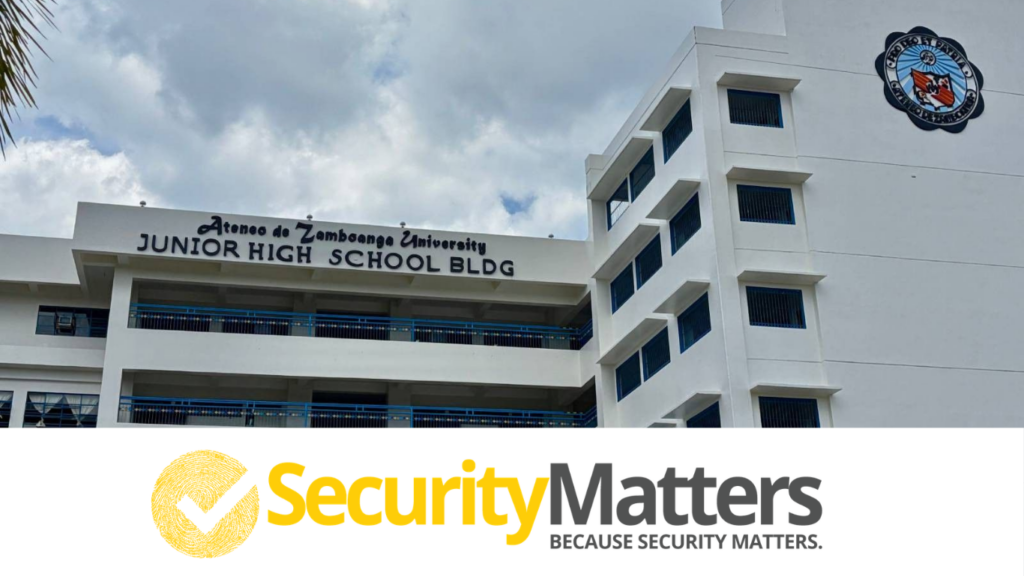
ZAMBOANGA CITY, Philippines — On the morning of Tuesday, August 18, 2026, a Grade 9 student armed with a handgun and a rifle entered the Junior High School campus of Ateneo de Zamboanga University in Barangay Tumaga and opened fire inside a classroom around 7:50 AM. The assault resulted in two fatalities, including a classmate and the teenage gunman who died by suicide, while sending panicked students scrambling for safety and leaving multiple others injured in the chaos. Local law enforcement from Police Regional Office 9 rapidly cordoned off the building as Zamboanga City Mayor Khymer Adan Olaso confirmed that the suspect had streamed the violence live on social media via a body-mounted camera. While official crisis protocols were immediately triggered to secure the perimeter and evacuate surviving students, analyzing this incident purely as a sudden disaster misdiagnoses the fundamental security breakdown.
The breach at Ateneo de Zamboanga represents a classic failure across all three core pillars of perimeter defense: detection, delay, and response. In standard campus security operations throughout the Philippines, perimeter defense relies almost exclusively on private security guards stationed at entry gates conducting manual bag probes with wooden or acrylic sticks. This operational model offers a dangerous illusion of security. Manual checks are designed to deter visible, low-level contraband; they are entirely incapable of detecting disassembled firearms, concealed handguns, or long weapons packed in standard duffel bags during peak student entry hours when thousands flood the gates. When access control infrastructure lacks calibrated walk-through metal detectors, industrial X-ray baggage scanners, and strict perimeter intrusion monitoring, the gate functions not as an active filter, but as an open turnstile.
To evaluate this threat profile accurately, security practitioners must recognize that the Zamboanga attack is not an isolated anomaly, but part of a documented structural trend across Philippine educational institutions. Just weeks earlier, two teenagers carrying semi-automatic handguns opened fire inside San Jose National High School in Tacloban City, resulting in three fatalities and fifteen injuries. That incident was subsequently linked by police intelligence to online extremist groomers, highlighting a growing threat vector where digital radicalization intersects with physical vulnerability. Similar weapon recoveries in Iloilo and high-profile perimeter breaches like the 2022 shooting at Ateneo de Manila University demonstrate that academic institutions across both public and private sectors are operating with outdated threat models that fail to account for motivated, armed internal actors.
A rigorous threat audit must also examine weapon acquisition and regulatory gaps under Republic Act No. 10591, the Comprehensive Firearms and Ammunition Regulation Act. While Philippine law strictly prohibits minors from licensing or purchasing firearms, the physical reality is that military-grade rifles and handguns continue to penetrate school perimeters. This indicates a double-sided breakdown: the failure to enforce mandatory safe-storage accountability for legal gun owners through Child Access Prevention statutes, alongside unchecked regional black-market leakage. When legal gun owners face no vicarious criminal liability for leaving lethal weapons accessible to minors, the risk is transferred entirely onto unprotected public spaces.
Furthermore, the perpetrator’s use of a body-cam livestream confirms a shift toward performative, digitally driven violence. Static security guards and reactive police patrols cannot neutralize a threat that matures online before manifesting physically. Effective asset protection requires educational institutions to move beyond passive guarding toward proactive risk management, specifically through the establishment of Behavioral Threat Assessment Teams. Combining guidance personnel, campus safety officers, and law enforcement intelligence, these teams audit early warning indicators, drastic behavioral shifts, and digital manifestos before an adversary reaches the physical perimeter.
Ultimately, treating campus security as a matter of post-incident police visibility is a failure of governance and risk doctrine. Tactical deployment after gunfire commences is containment, not prevention. Until Philippine educational institutions replace superficial gate procedures with hard physical access controls, continuous threat assessment protocols, and strict statutory accountability for firearm storage, school grounds will remain high-vulnerability targets for preventable tragedy.
Author